Generating Scannable Codes in React Applications
react-barcode and react-qr-code are React components designed to render scannable images directly in the browser, but they serve different data requirements. react-qr-code generates 2D matrix codes capable of storing URLs, contact info, or large text strings, making them ideal for mobile scanning. react-barcode generates 1D linear codes used for product IDs, inventory tracking, and legacy hardware scanners. Both packages wrap underlying JavaScript libraries to provide declarative React interfaces, yet they differ significantly in rendering methods, customization options, and server-side compatibility.
Npm Package Weekly Downloads Trend
Github Stars Ranking
Stat Detail


Generating Scannable Codes in React: react-barcode vs react-qr-code
Both react-barcode and react-qr-code are React components designed to render scannable images directly in the browser, but they work differently under the hood. react-qr-code creates 2D matrix codes for high-density data, while react-barcode creates 1D linear codes for standard product identification. Let's compare how they tackle common engineering problems.
🗂️ Data Capacity and Use Case
react-qr-code handles large amounts of data in a small space.
- Stores URLs, contact info, or long text strings.
- Scannable by any smartphone camera without special hardware.
// react-qr-code: High density data
import QRCode from 'react-qr-code';

<QRCode value="https://example.com/ticket/12345" />
react-barcode handles limited numeric or alphanumeric data.
- Stores product IDs, ISBNs, or serial numbers.
- Requires laser scanners or specific apps to read reliably.
// react-barcode: Limited density data
import Barcode from 'react-barcode';

<Barcode value="123456789012" format="EAN13" />
🎨 Rendering Engine and Output
react-qr-code renders SVG elements by default.
- Works well with CSS styling and responsive layouts.
- Scales without losing quality on high-DPI screens.
// react-qr-code: SVG output
<QRCode value="data" size={256} />
react-barcode renders SVG or Canvas depending on props.
- May require specific width/height settings to look correct.
- Can be trickier to style with CSS compared to pure SVG.
// react-barcode: SVG or Canvas output
<Barcode value="12345" width={2} height={100} />
🛠️ Customization and Styling
react-qr-code offers color and margin controls.
- Change foreground and background colors easily.
- Adjust margins for scanner padding requirements.
// react-qr-code: Styling props
<QRCode
  value="data"
  bgColor="#ffffff"
  fgColor="#000000"
  includeMargin={true}
/>
react-barcode offers line and text controls.
- Adjust line width and height for scanner compatibility.
- Toggle display of human-readable text below bars.
// react-barcode: Styling props
<Barcode
  value="12345"
  displayValue={true}
  fontOptions="bold"
/>
☁️ SSR and Server Compatibility
react-qr-code is generally server-side rendering friendly.
- Renders static SVG markup safely on the server.
- Works out of the box with Next.js or Remix static generation.
// react-qr-code: SSR safe
export default function Ticket() {
  return <QRCode value={ticketId} />;
}
react-barcode has had issues with server environments.
- Some versions access
windowobject during render. - May require dynamic imports in SSR frameworks to avoid errors.
// react-barcode: SSR caution
const Barcode = dynamic(() => import('react-barcode'), { ssr: false });
🔄 Maintenance and Ecosystem
react-qr-code is actively maintained.
- Regular updates for React compatibility and security.
- Wide community support and extensive examples available.
// react-qr-code: Stable ecosystem
import QRCode from 'react-qr-code'; // Standard import
react-barcode has slower update cycles.
- Check for React 18 compatibility before using in new projects.
- Consider alternatives if strict mode causes rendering issues.
// react-barcode: Verify compatibility
import Barcode from 'react-barcode'; // Check version
🤝 Similarities: Shared Ground Between Packages
While the differences are clear, both packages also share many core ideas and tools. Here are key overlaps:
1. ⚛️ Both Are React Components
- Use props to pass data and configuration.
- Support standard React lifecycle and hooks.
// Example: Shared React pattern
function CodeGenerator({ value }) {
  return <Component value={value} />;
}
2. 🖼️ Both Render Visual Codes
- Generate scannable images directly in the DOM.
- Enable client-side generation without external APIs.
// Both generate visual output
<QRCode value="123" />
<Barcode value="123" />
3. 📦 Both Rely on Underlying JS Libs
- Wrap qrcode or JsBarcode respectively.
- Abstract complex drawing logic from the developer.
// Both abstract underlying logic
// react-qr-code -> qrcode
// react-barcode -> JsBarcode
4. ✅ Both Support Custom Colors
- Allow branding through color props.
- Enable dark mode compatibility.
// react-qr-code
<QRCode fgColor="#000" bgColor="#fff" />

// react-barcode
<Barcode lineColor="#000" background="#fff" />
5. 👥 Strong Community Usage
- Used in e-commerce, ticketing, and inventory apps.
- Rich documentation and Stack Overflow support.
// Example: Common use cases
// react-qr-code -> Login tokens, URLs
// react-barcode -> Product SKUs, Shipping labels
📊 Summary: Key Similarities
| Feature | Shared by Both Packages |
|---|---|
| Core Tech | ⚛️ React Components |
| Output | 🖼️ Scannable Images (SVG/Canvas) |
| Generation | 📦 Client-side Logic |
| Styling | ✅ Color Customization |
| Ecosystem | 👥 Widely Used in Production |
🆚 Summary: Key Differences
| Feature | react-qr-code | react-barcode |
|---|---|---|
| Code Type | 🟥 2D Matrix (QR) | 📏 1D Linear (Barcode) |
| Data Capacity | 🗄️ High (URLs, Text) | 🗄️ Low (IDs, Numbers) |
| Scanner | 📱 Smartphone Camera | 🔫 Laser/Linear Scanner |
| SSR Support | ✅ Native Support | ⚠️ May Require Dynamic Import |
| Maintenance | 🟢 Active | 🟡 Slower Updates |
💡 The Big Picture
react-qr-code is like a modern digital passport 🛂 — great for apps that need to share rich data with mobile users. Ideal for authentication, ticketing, marketing links, and contact sharing.
react-barcode is like a traditional product label 🏷️ — perfect for systems that rely on legacy hardware or retail standards. Shines in inventory management, shipping labels, and point-of-sale integration.
Final Thought: Despite their differences, both packages serve a critical role in bridging physical and digital worlds. Choose based on your scanner hardware and data density needs — not just package features.
How to Choose: react-barcode vs react-qr-code
- react-barcode:
Choose
react-barcodeif you need to integrate with existing inventory systems, retail hardware, or legacy scanners that require 1D linear codes like EAN or CODE128. Be aware that it may require extra configuration for server-side rendering and has a slower update cycle compared to QR alternatives. This package is best suited for internal tools, warehouse dashboards, or products requiring standard retail barcode compliance. - react-qr-code:
Choose
react-qr-codeif your application needs to store URLs, large text, or contact details that users will scan with smartphone cameras. It offers robust SVG rendering, excellent server-side rendering support, and active maintenance suitable for modern React stacks. This package is the standard choice for ticketing, authentication, and mobile-first experiences where data density matters.
Popular Comparisons
README for react-barcode
react-barcode

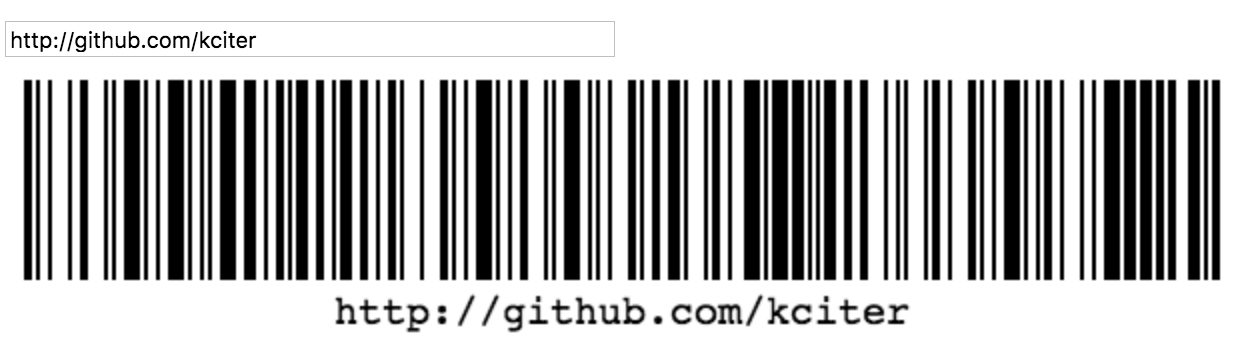
Preview: http://kciter.github.io/react-barcode/
A <Barcode/> component for use with React.
This library wrapped JsBarcode.
Installation
npm install react-barcode
Usage
var React = require('react');
var ReactDOM = require('react-dom');
var Barcode = require('react-barcode');

ReactDOM.render(
  <Barcode value="http://github.com/kciter" />,
  mountNode
);
Or
import Barcode from 'react-barcode';

export const Example: FunctionComponent = () => {
    return <Barcode value="barcode-example" />;
};
Options:
For information about how to use the options, see the wiki page.
{
  width: 2,
  height: 100,
  format: "CODE128",
  displayValue: true,
  fontOptions: "",
  font: "monospace",
  textAlign: "center",
  textPosition: "bottom",
  textMargin: 2,
  fontSize: 20,
  background: "#ffffff",
  lineColor: "#000000",
  margin: 10,
  marginTop: undefined,
  marginBottom: undefined,
  marginLeft: undefined,
  marginRight: undefined,
  id: undefined,
  className: undefined
}
Reference
Donate
If you like this open source, you can sponsor it. :smile:
Licence
Copyright (c) 2016, Lee Sun-Hyoup
Permission to use, copy, modify, and/or distribute this software for any purpose with or without fee is hereby granted, provided that the above copyright notice and this permission notice appear in all copies.
THE SOFTWARE IS PROVIDED "AS IS" AND THE AUTHOR DISCLAIMS ALL WARRANTIES WITH REGARD TO THIS SOFTWARE INCLUDING ALL IMPLIED WARRANTIES OF MERCHANTABILITY AND FITNESS. IN NO EVENT SHALL THE AUTHOR BE LIABLE FOR ANY SPECIAL, DIRECT, INDIRECT, OR CONSEQUENTIAL DAMAGES OR ANY DAMAGES WHATSOEVER RESULTING FROM LOSS OF USE, DATA OR PROFITS, WHETHER IN AN ACTION OF CONTRACT, NEGLIGENCE OR OTHER TORTIOUS ACTION, ARISING OUT OF OR IN CONNECTION WITH THE USE OR PERFORMANCE OF THIS SOFTWARE.