前端数据可视化库架构选型指南
apexcharts、chart.js、echarts 和 recharts 都是流行的 JavaScript 图表库,用于在 Web 应用中展示数据。apexcharts 和 echarts 提供强大的配置项和交互功能,适合复杂报表。chart.js 轻量简单,适合基础图表需求。recharts 专为 React 设计,采用声明式组件 API。它们都支持常见的图表类型,如折线图、柱状图和饼图,但在渲染引擎、API 设计和框架集成上有显著差异。
npm下载趋势
GitHub Stars 排名
统计详情


四大图表库深度对比:架构、性能与开发体验
apexcharts、chart.js、echarts 和 recharts 都是前端开发中常用的数据可视化工具,但它们的底层实现和设计理念截然不同。作为架构师,我们需要从渲染引擎、API 设计、性能表现和框架集成四个维度进行深入分析,以便做出正确的技术选型。
🎨 渲染引擎:SVG 与 Canvas 的抉择
渲染引擎决定了图表的清晰度、交互能力和性能上限。
apexcharts 默认使用 SVG 渲染。
- 矢量图形,缩放不失真。
- 适合需要清晰细节和 DOM 交互的场景。
// apexcharts: 默认 SVG
const options = {
  chart: { type: 'line' }, // SVG rendering
  series: [{ name: 'Sales', data: [30, 40, 35] }]
};
const chart = new ApexCharts(document.querySelector('#chart'), options);
chart.js 默认使用 Canvas 渲染。
- 位图图形,适合大量数据点。
- 交互需要通过事件监听模拟,DOM 操作较弱。
// chart.js: 默认 Canvas
const ctx = document.getElementById('chart').getContext('2d');
const chart = new Chart(ctx, {
  type: 'line', // Canvas rendering
  data: { labels: ['A', 'B'], datasets: [{ data: [30, 40] }] }
});
echarts 默认使用 Canvas,但支持切换到 SVG。
- 性能与清晰度的平衡。
- 大数据量下 Canvas 优势明显。
// echarts: 默认 Canvas,可配置 SVG
const chart = echarts.init(document.getElementById('chart'), null, {
  renderer: 'canvas' // 或 'svg'
});
chart.setOption({ series: [{ type: 'line', data: [30, 40] }] });
recharts 基于 SVG 构建。
- 完全由 React 组件驱动。
- 样式定制方便,但节点过多时性能下降。
// recharts: 基于 SVG 组件
<LineChart width={500} height={300} data={data}>
  <Line type="monotone" dataKey="uv" stroke="#8884d8" />
</LineChart>
🛠️ API 设计:配置项驱动 vs 组件化
API 设计影响代码的可读性和维护成本。
apexcharts 采用 配置对象 驱动。
- 所有功能通过
options对象控制。 - 结构清晰,但深层嵌套可能导致维护困难。
// apexcharts: 配置对象
const options = {
  chart: { type: 'bar' },
  xaxis: { categories: ['Jan', 'Feb'] },
  series: [{ data: [10, 20] }]
};
chart.js 采用 数据与配置分离。
data定义内容,options定义样式。- 逻辑简单,适合快速上手。
// chart.js: 数据与配置分离
const config = {
  data: { labels: ['Jan', 'Feb'], datasets: [{ data: [10, 20] }] },
  options: { responsive: true }
};
echarts 采用 庞大配置项 体系。
option对象包含所有细节。- 功能最强,但学习曲线陡峭。
// echarts: 庞大配置项
const option = {
  xAxis: { type: 'category', data: ['Jan', 'Feb'] },
  yAxis: { type: 'value' },
  series: [{ type: 'bar', data: [10, 20] }]
};
recharts 采用 声明式组件。
- 图表即组件,利用 React 特性。
- 代码直观,易于组合和复用。
// recharts: 声明式组件
<BarChart data={data}>
  <XAxis dataKey="name" />
  <Bar dataKey="uv" fill="#8884d8" />
</BarChart>
🚀 性能表现:大数据量处理能力
当数据点超过 1000 个时,渲染性能成为关键瓶颈。
apexcharts 在大数据下表现一般。
- SVG 节点过多会导致 DOM 操作变慢。
- 建议开启
chart.zoom.enabled优化体验。
// apexcharts: 优化配置
const options = {
  chart: { zoom: { enabled: true } },
  series: [{ data: largeDataSet }] // 大数据集
};
chart.js 性能较好。
- Canvas 绘制效率高。
- 支持
animation: false进一步提升速度。
// chart.js: 关闭动画优化
const config = {
  options: { animation: false },
  data: { datasets: [{ data: largeDataSet }] }
};
echarts 性能最强。
- 支持
large: true开启大数据优化。 - 可处理十万级数据点。
// echarts: 大数据优化
chart.setOption({
  series: [{ type: 'scatter', large: true, data: largeDataSet }]
});
recharts 性能受限。
- SVG 组件过多会拖慢 React 渲染。
- 适合中小规模数据,不建议用于实时监控大屏。
// recharts: 限制数据量
<LineChart data={data.slice(0, 500)}>
  <Line dataKey="value" />
</LineChart>
⚛️ React 集成体验
在 React 项目中,集成方式影响开发效率。
apexcharts 需要官方包装器 react-apexcharts。
- 将配置对象传递给组件。
- 响应式更新需手动处理
options变化。
// apexcharts: React 包装器
import Chart from 'react-apexcharts';
<Chart options={options} series={series} type="line" />
chart.js 需要社区包装器 react-chartjs-2。
- 用法类似原生,但需注意组件重渲染。
- 性能优化需额外配置。
// chart.js: React 包装器
import { Line } from 'react-chartjs-2';
<Line data={chartData} options={chartOptions} />
echarts 通常手动集成或使用 echarts-for-react。
- 推荐
useRef手动初始化以控制生命周期。 - 避免不必要的
setOption调用。
// echarts: 手动集成
const chartRef = useRef(null);
useEffect(() => {
  const chart = echarts.init(chartRef.current);
  chart.setOption(option);
}, [option]);
<div ref={chartRef} style={{ width: '100%' }} />
recharts 原生支持 React。
- 无需包装器,直接导入组件。
- 状态管理自然,与 React 生态无缝融合。
// recharts: 原生 React
<LineChart data={data}>
  <Line dataKey="value" />
</LineChart>
📊 总结对比表
| 特性 | apexcharts | chart.js | echarts | recharts |
|---|---|---|---|---|
| 渲染引擎 | SVG | Canvas | Canvas / SVG | SVG |
| API 风格 | 配置对象 | 配置对象 | 配置对象 | React 组件 |
| 大数据性能 | 中 | 高 | 极高 | 低 |
| React 集成 | 包装器 | 包装器 | 手动/包装器 | 原生 |
| 学习成本 | 低 | 低 | 高 | 中 |
| 定制能力 | 中 | 中 | 高 | 高 |
💡 选型建议
apexcharts 适合追求美观且交互适中的通用后台 — 它提供了很好的默认样式,减少 CSS 调整工作。
chart.js 适合轻量级需求或简单仪表盘 — 如果只需要展示基础趋势且不想引入重型库,它是最佳选择。
echarts 适合复杂数据分析和专业可视化 — 如果项目涉及地图、海量数据或复杂交互,它的功能深度无可替代。
recharts 适合 React 技术栈的中小型应用 — 如果团队熟悉 React 且数据量不大,它的开发体验最流畅。
核心结论:没有最好的库,只有最适合场景的库。对于 React 项目,若数据量小优先 recharts;若数据量大或需求复杂,优先 echarts;若追求快速落地且样式现代,考虑 apexcharts。
如何选择: apexcharts vs chart.js vs echarts vs recharts
- apexcharts:
选择
apexcharts如果你需要开箱即用的现代外观,且希望使用 SVG 渲染以获得清晰的细节。它适合需要丰富交互(如缩放、平移)但不想编写复杂配置的中大型项目。其 React 封装良好,集成成本低。 - chart.js:
选择
chart.js如果你追求轻量级且依赖 Canvas 渲染来处理中等规模数据。它适合简单仪表盘或需要快速原型的场景。社区插件丰富,但高级交互功能不如 ECharts 强大。 - echarts:
选择
echarts如果你需要处理大规模数据或构建复杂的专业可视化(如地图、热力图)。它性能优异,支持 Canvas 和 SVG 切换,配置项极其丰富,适合企业级后台和数据分析平台。 - recharts:
选择
recharts如果你的项目基于 React 且团队偏好声明式开发模式。它将图表作为组件组合,易于定制样式和逻辑,但性能在大数据量下不如 Canvas 方案,适合中小型数据展示。
热门对比
apexcharts的README

ApexCharts
Modern, interactive JavaScript charts your users will love - built for dashboards, SaaS, and data-heavy UIs.




Live demos · Documentation · License
Why ApexCharts
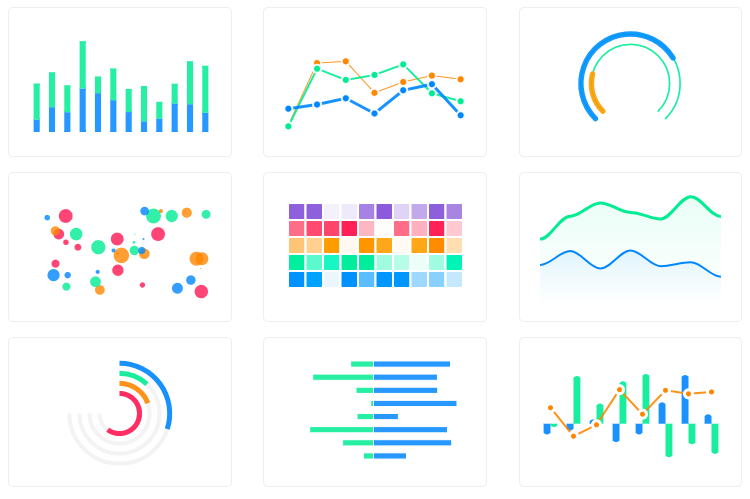
- 16+ chart types out of the box — line, area, bar, column, pie, donut, radar, heatmap, treemap, candlestick, boxplot, funnel, pyramid, gauge and more
- SSR support for Next.js, Nuxt, SvelteKit, Astro, and other meta-frameworks — render real SVG on the server, hydrate on the client
- Tree-shakable — import only the chart types and features you need; typical bundles are 30–60% smaller than the full build
- TypeScript-first — full type definitions ship with the package, no
@types/*install needed - Zero runtime dependencies — no React/Vue/D3 required; works in any framework or vanilla JS
- Accessibility — keyboard navigation and ARIA support built in
- Free for most users — see License
Install
npm install apexcharts
Or via CDN:
<script src="https://cdn.jsdelivr.net/npm/apexcharts"></script>
Quick start
import ApexCharts from 'apexcharts'

const chart = new ApexCharts(document.querySelector('#chart'), {
  chart: { type: 'bar' },
  series: [{ name: 'Sales', data: [30, 40, 35, 50, 49, 60, 70, 91, 125] }],
  xaxis: { categories: [1991, 1992, 1993, 1994, 1995, 1996, 1997, 1998, 1999] }
})

chart.render()
Browse 100+ ready-to-use samples — copy, paste, ship.
Chart types
- Line · Area · Range Area
- Bar · Column · Range Bar / Timeline
- Scatter · Bubble
- Candlestick · BoxPlot
- Pie · Donut · Polar Area · Radial Bar / Gauge
- Radar · Heatmap · Treemap
- Funnel
Combine any of the above as mixed/combo charts, stacked variants, sparklines, or synchronized multi-chart layouts.
Framework wrappers
Official:
- React — react-apexcharts
- Vue 3 — vue3-apexcharts
- Vue 2 — vue-apexcharts
- Angular — ng-apexcharts
- Blazor — Blazor-ApexCharts
- Stencil — stencil-apexcharts
Community:
- Svelte — svelte-apexcharts
- Ruby — apexcharts.rb
- Laravel — larapex-charts
- R — apexcharter
Server-side rendering
Render chart HTML on the server, then hydrate in the browser. Works with Next.js, Nuxt, SvelteKit, Astro, Remix, and any Node-based framework.
// Server
import ApexCharts from 'apexcharts/ssr'

const chartHTML = await ApexCharts.renderToHTML({
  chart: { type: 'bar' },
  series: [{ data: [30, 40, 35, 50, 49, 60, 70, 91, 125] }],
  xaxis: { categories: [1991, 1992, 1993, 1994, 1995, 1996, 1997, 1998, 1999] }
}, { width: 500, height: 300 })

// Returns hydration-ready HTML with embedded SVG
// Client
import ApexCharts from 'apexcharts/client'

ApexCharts.hydrate(document.getElementById('my-chart'))
// or: ApexCharts.hydrateAll()
No more dynamic(() => import(...), { ssr: false }) workarounds — the chart renders on the server and becomes interactive on hydration.
Tree-shaking — ship only what you use
By default import ApexCharts from 'apexcharts' includes everything. For smaller bundles, import from apexcharts/core and add only what you need:
import ApexCharts from 'apexcharts/core'   // bare class — no chart types, no features

// Chart types (match the value of chart.type)
import 'apexcharts/line'
import 'apexcharts/bar'
// import 'apexcharts/area'
// import 'apexcharts/scatter'

// Optional features
import 'apexcharts/features/legend'
import 'apexcharts/features/toolbar'      // zoom/pan toolbar
// import 'apexcharts/features/exports'      // SVG/PNG/CSV download
// import 'apexcharts/features/annotations'
// import 'apexcharts/features/keyboard'     // keyboard navigation
See the tree-shaking guide for the complete list of entry points.
Browser support
ApexCharts works in all modern evergreen browsers (Chrome, Firefox, Safari, Edge). For server-side rendering, Node.js 18+ is required.
Documentation
Contributing
npm install
npm run dev     # vite build --watch
npm test        # e2e + unit
See CONTRIBUTING.md for setup, coding conventions, and PR guidelines.
License
ApexCharts uses a revenue-based license:
- Free for individuals, and organizations with under $2M USD in annual gross revenue — including commercial and internal use. No registration required.
- Commercial license required for organizations at or above $2M USD annual gross revenue.
Full terms: apexcharts.com/license
Need an enterprise data grid?
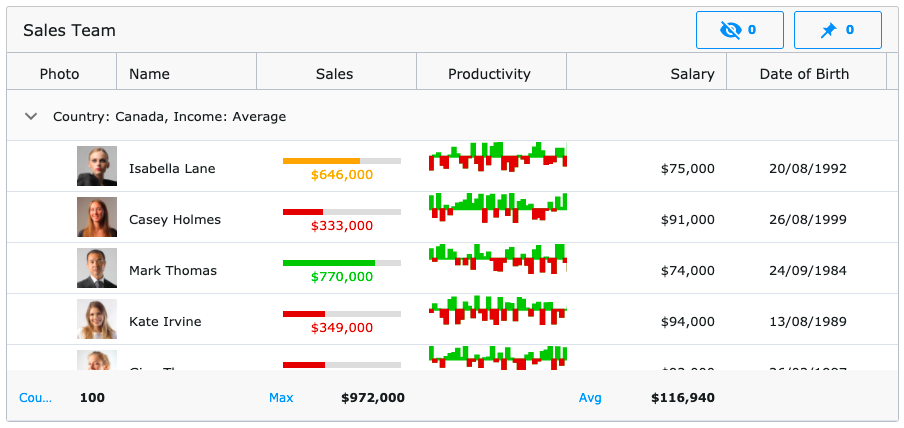
We've partnered with Infragistics, creators of Ignite UI — high-performance data grids that handle unlimited rows and columns, with custom templates and real-time updates.
Available for:
Angular · React · Blazor · Web Components · jQuery
Contact
- Issues & bugs: GitHub Issues
- Questions: GitHub Discussions
- Email: info@apexcharts.com