draft-js vs ckeditor vs quill vs slate-react
Rich Text Editors for Web Development
draft-jsckeditorquillslate-reactSimilar Packages:

Rich Text Editors for Web Development

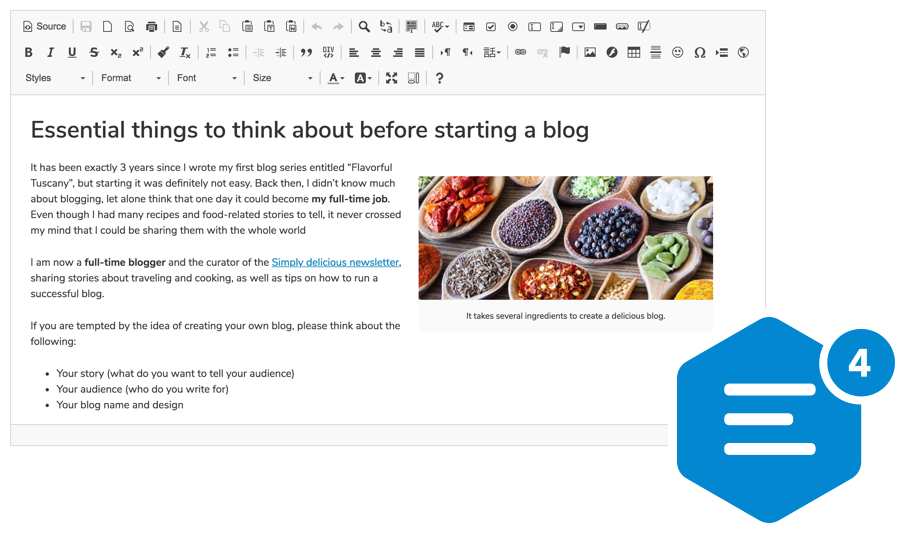
Rich text editors are essential tools in web development that allow users to create and edit content in a WYSIWYG (What You See Is What You Get) format. These editors provide a user-friendly interface for formatting text, inserting images, and managing content, making them invaluable for applications that require user-generated content. The choice of a rich text editor can significantly impact the user experience, performance, and extensibility of a web application.

Npm Package Weekly Downloads Trend

3 Years

Github Stars Ranking

Stat Detail

Package
Downloads
Stars
Size
Issues
Publish
License
draft-js1,170,30522,876-9546 years agoMIT
ckeditor0523-77 years ago(GPL-2.0 OR LGPL-2.1 OR MPL-1.1)
quill046,9303.04 MB628a year agoBSD-3-Clause
slate-react031,5802.77 MB6952 months agoMIT

Feature Comparison: draft-js vs ckeditor vs quill vs slate-react

Customization

  • draft-js:

    Draft.js provides a highly customizable framework for building rich text editors in React. Developers can create their own block types, decorators, and custom styling, allowing for tailored editing experiences that fit specific application needs.

  • ckeditor:

    CKEditor offers extensive customization options through its plugin architecture, allowing developers to add or modify features easily. It supports a wide range of plugins for functionalities like image uploads, media embeds, and more, making it suitable for complex applications.

  • quill:

    Quill is designed to be easy to customize with a simple API. It allows developers to create custom formats and themes, but it may not offer as many built-in options as CKEditor or Draft.js, making it more suitable for simpler use cases.

  • slate-react:

    Slate is built for customization, enabling developers to define their own editor behavior and rendering logic. This flexibility allows for the creation of unique editing experiences, but it requires a deeper understanding of the library's architecture.

Ease of Use

  • draft-js:

    Draft.js has a steeper learning curve due to its flexibility and the need to manage content state explicitly. However, once mastered, it provides powerful capabilities for building custom editors that can enhance user experience.

  • ckeditor:

    CKEditor is user-friendly with a familiar interface, making it easy for end-users to adopt. The editor comes with a rich set of features out of the box, which can reduce the time needed for implementation and training.

  • quill:

    Quill is known for its simplicity and ease of use. It provides a clean interface and straightforward API, making it an excellent choice for developers who want to implement a basic rich text editor quickly.

  • slate-react:

    Slate can be complex to set up due to its flexibility, but it offers a powerful API that allows for a tailored experience. Developers need to invest time in understanding its concepts to fully leverage its capabilities.

Performance

  • draft-js:

    Draft.js is designed for performance in React applications, leveraging React's rendering optimizations. However, managing large documents can lead to performance issues if not handled correctly, requiring careful state management.

  • ckeditor:

    CKEditor is optimized for performance, but the extensive features may lead to larger bundle sizes. Developers need to be mindful of the plugins they include to maintain performance, especially in large applications.

  • quill:

    Quill is lightweight and performs well for basic use cases. It is optimized for speed, but as complexity increases (e.g., large documents), performance may degrade, necessitating performance tuning.

  • slate-react:

    Slate's performance can vary based on how it is implemented. Since it allows for complex structures, developers must optimize their implementation to avoid performance bottlenecks, especially with large datasets.

Community and Support

  • draft-js:

    Draft.js is backed by Facebook and has a solid community, but it may not be as extensive as CKEditor. Documentation is available, but developers may encounter challenges due to its flexibility and complexity.

  • ckeditor:

    CKEditor has a large community and extensive documentation, making it easier to find support and resources. The active development and regular updates ensure that it stays relevant with new features and improvements.

  • quill:

    Quill has a growing community and decent documentation, making it accessible for developers. However, it may not have as many resources or plugins available compared to CKEditor or Draft.js.

  • slate-react:

    Slate has a dedicated community and good documentation, but its complexity can lead to a steeper learning curve. The community is active, and developers can find support through forums and GitHub.

Integration

  • draft-js:

    Draft.js is specifically designed for React, making it an excellent choice for React applications. Its integration is straightforward, allowing developers to leverage React's component model effectively.

  • ckeditor:

    CKEditor can be easily integrated into various frameworks and platforms, including React, Angular, and Vue. Its extensive API allows for seamless integration with existing applications and workflows.

  • quill:

    Quill can be integrated into any web application with minimal effort. It provides a simple API for embedding the editor, making it suitable for projects that require quick implementation.

  • slate-react:

    Slate is built for React, allowing for deep integration with React's ecosystem. Its flexibility allows developers to create custom behaviors and interactions that align with their application's architecture.

How to Choose: draft-js vs ckeditor vs quill vs slate-react

  • draft-js:

    Choose Draft.js if you are building a React application and need a flexible, customizable editor that integrates seamlessly with React's component model. It is well-suited for applications that require fine-grained control over content and state management.

  • ckeditor:

    Choose CKEditor if you need a highly customizable and feature-rich editor with extensive support for plugins and a robust community. It's ideal for enterprise-level applications where advanced features like collaboration and real-time editing are required.

  • quill:

    Choose Quill if you want a lightweight, easy-to-use editor that provides a good balance between simplicity and functionality. It's great for projects that require a straightforward implementation without the need for extensive customization or features.

  • slate-react:

    Choose Slate if you need a highly customizable editor that allows for complex content structures and rich interactions. It's best for applications that require a unique editing experience and where you want to define your own behavior and rendering.

README for draft-js

draftjs-logo

Draft.js

Build Status npm version

Live Demo


Draft.js is a JavaScript rich text editor framework, built for React and backed by an immutable model.

  • Extensible and Customizable: We provide the building blocks to enable the creation of a broad variety of rich text composition experiences, from basic text styles to embedded media.
  • Declarative Rich Text: Draft.js fits seamlessly into React applications, abstracting away the details of rendering, selection, and input behavior with a familiar declarative API.
  • Immutable Editor State: The Draft.js model is built with immutable-js, offering an API with functional state updates and aggressively leveraging data persistence for scalable memory usage.

Learn how to use Draft.js in your own project.

API Notice

Before getting started, please be aware that we recently changed the API of Entity storage in Draft. The latest version, v0.10.0, supports both the old and new API. Following that up will be v0.11.0 which will remove the old API. If you are interested in helping out, or tracking the progress, please follow issue 839.

Getting Started

npm install --save draft-js react react-dom

or

yarn add draft-js react react-dom

Draft.js depends on React and React DOM which must also be installed.

Using Draft.js

import React from 'react';
import ReactDOM from 'react-dom';
import {Editor, EditorState} from 'draft-js';

class MyEditor extends React.Component {
  constructor(props) {
    super(props);
    this.state = {editorState: EditorState.createEmpty()};
    this.onChange = (editorState) => this.setState({editorState});
    this.setEditor = (editor) => {
      this.editor = editor;
    };
    this.focusEditor = () => {
      if (this.editor) {
        this.editor.focus();
      }
    };
  }

  componentDidMount() {
    this.focusEditor();
  }

  render() {
    return (
      <div style={styles.editor} onClick={this.focusEditor}>
        <Editor
          ref={this.setEditor}
          editorState={this.state.editorState}
          onChange={this.onChange}
        />
      </div>
    );
  }
}

const styles = {
  editor: {
    border: '1px solid gray',
    minHeight: '6em'
  }
};

ReactDOM.render(
  <MyEditor />,
  document.getElementById('container')
);

Since the release of React 16.8, you can use Hooks as a way to work with EditorState without using a class.

import React from 'react';
import ReactDOM from 'react-dom';
import {Editor, EditorState} from 'draft-js';

function MyEditor() {
  const [editorState, setEditorState] = React.useState(
    EditorState.createEmpty()
  );

  const editor = React.useRef(null);

  function focusEditor() {
    editor.current.focus();
  }

  React.useEffect(() => {
    focusEditor()
  }, []);

  return (
    <div onClick={focusEditor}>
      <Editor
        ref={editor}
        editorState={editorState}
        onChange={editorState => setEditorState(editorState)}
      />
    </div>
  );
}

Note that the editor itself is only as tall as its contents. In order to give users a visual cue, we recommend setting a border and a minimum height via the .DraftEditor-root CSS selector, or using a wrapper div like in the above example.

Because Draft.js supports unicode, you must have the following meta tag in the <head> </head> block of your HTML file:

<meta charset="utf-8" />

Further examples of how Draft.js can be used are provided below.

Examples

Visit http://draftjs.org/ to try out a basic rich editor example.

The repository includes a variety of different editor examples to demonstrate some of the features offered by the framework.

To run the examples, first build Draft.js locally. The Draft.js build is tested with Yarn v1 only. If you're using any other package manager and something doesn't work, try using yarn v1:

git clone https://github.com/facebook/draft-js.git
cd draft-js
yarn install
yarn run build

then open the example HTML files in your browser.

Draft.js is used in production on Facebook, including status and comment inputs, Notes, and messenger.com.

Browser Support

IE / Edge
IE / Edge
Firefox
Firefox
Chrome
Chrome
Safari
Safari
iOS Safari
iOS Safari
Chrome for Android
Chrome for Android
IE11, Edge [1, 2]last 2 versionslast 2 versionslast 2 versionsnot fully supported [3]not fully supported [3]

[1] May need a shim or a polyfill for some syntax used in Draft.js (docs).

[2] IME inputs have known issues in these browsers, especially Korean (docs).

[3] There are known issues with mobile browsers, especially on Android (docs).

Resources and Ecosystem

Check out this curated list of articles and open-sourced projects/utilities: Awesome Draft-JS.

Discussion and Support

Join our Slack team!

Contribute

We actively welcome pull requests. Learn how to contribute.

License

Draft.js is MIT licensed.

Examples provided in this repository and in the documentation are separately licensed.